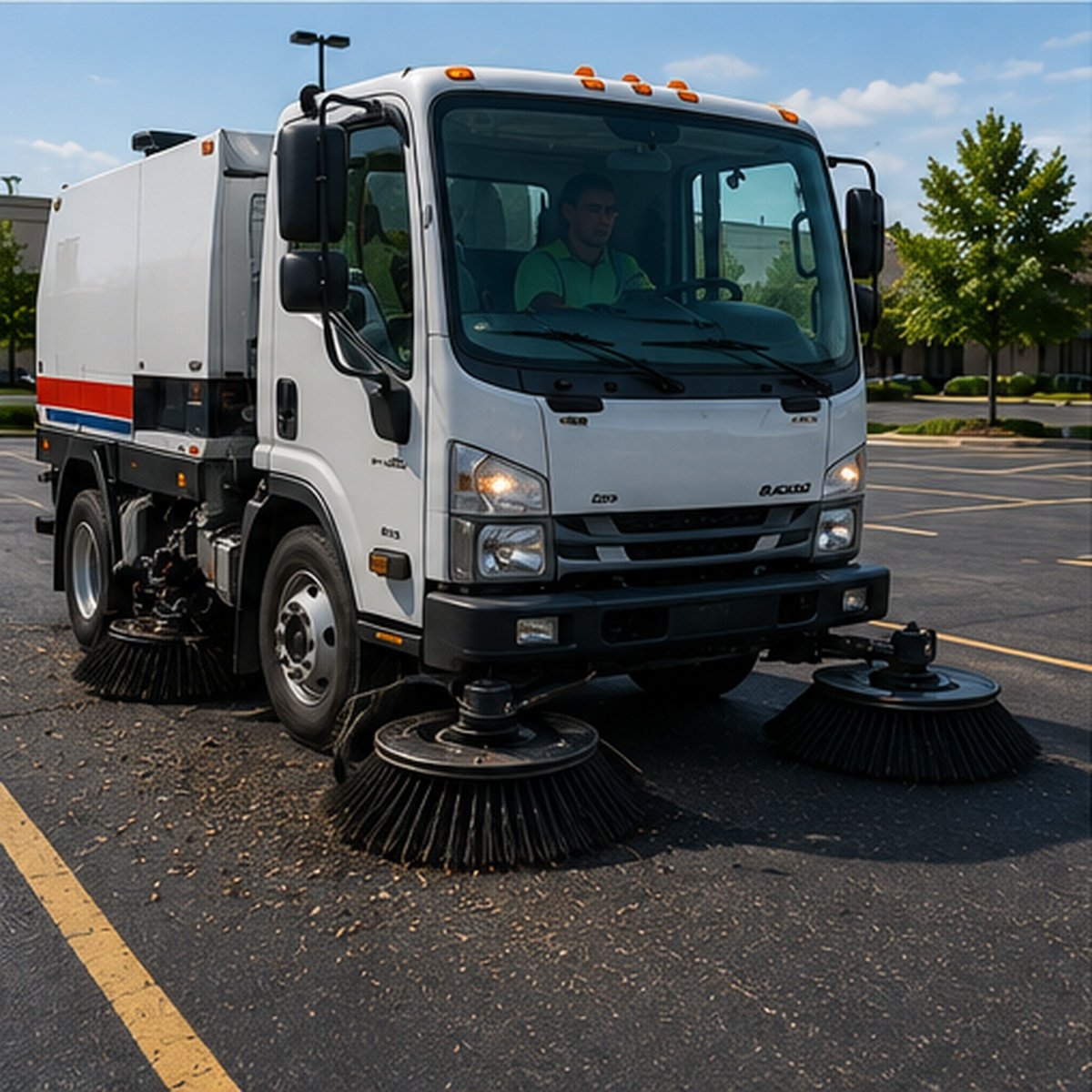
Scheduled sweeping keeps debris out of your drains and grit off your asphalt, before either becomes expensive.
Loose gravel, leaves, and sand act like sandpaper on asphalt every time a car drives over them, and when that debris washes toward a catch basin, it’s usually the reason a drain backs up during a storm. Sweeping is the cheapest maintenance a commercial lot gets, and it’s the one most properties skip until there’s a visible problem.
We run scheduled sweeping routes across the Wichita metro on a weekly, biweekly, or monthly cadence depending on the property, plus one-off sweeps after construction work, snow season, or a heavy storm. Routes are built around your property’s traffic patterns and drain locations, not a generic pass down the middle of the lot, and we flag anything unusual we spot along the way — a new crack, a loose grate, standing water — as part of the visit.
A dirty lot doesn’t just look neglected — loose debris grinds against the asphalt surface every time a tire rolls over it, accelerating wear and shortening the life of your pavement. Worse, sand, leaves, and trash wash straight toward your storm drains, and a clogged catch basin during a Kansas thunderstorm can mean standing water across half your lot, or water backing up into a loading dock or entrance. Regular sweeping is the least expensive line item on a maintenance budget and the one with the clearest payoff: fewer drainage emergencies, slower pavement wear, and a lot that looks cared for.
Weekly, biweekly, or monthly sweeps built around your property’s traffic and drain layout, not a one-size-fits-all pass.
Extra passes after spring pollen season, fall leaf drop, and post-winter sand and salt cleanup.
Full lot coverage including curb lines and drop-off zones where debris collects fastest.
Our sweeping crew reports anything they notice that needs attention — a new crack, a damaged wheel stop, a clogged grate — so small issues get caught between formal inspections.
| Pricing factor | How it affects your estimate |
|---|---|
| Lot size & scope | Larger lots and multi-visit contracts change per-unit pricing. |
| Condition at signup | More extensive existing damage means more work on the first visit. |
| Access & scheduling | After-hours or restricted-access work may affect scheduling and cost. |
Sweeping is typically priced per visit based on lot size and route frequency, with a lower per-visit rate for properties on a recurring schedule versus one-off sweeps. Multi-property clients on a consolidated schedule often see the best per-lot pricing. We’ll quote based on square footage and how often you want the route run.
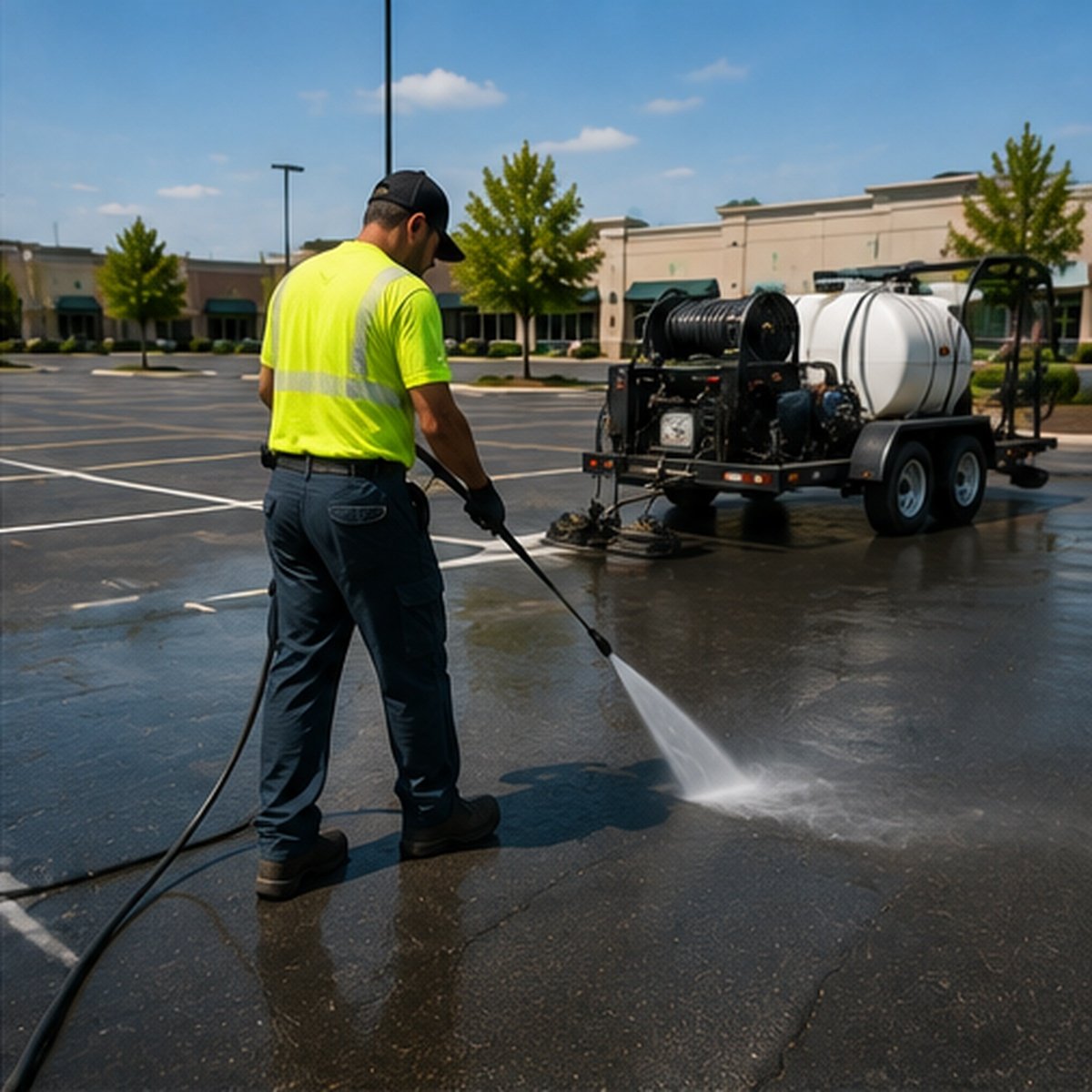
A lot of sweeping companies run the same route on the same day regardless of what’s actually happening on your property. We build routes around your traffic patterns and flag what we see, because our sweeping crews are the same people who handle pothole repair, crack sealing, and drainage work — they know what to look for, not just how to run a broom.
No pressure, no obligation — just a straightforward look at your property.
We walk the property to map traffic patterns, drain locations, and problem debris zones.
We propose a schedule — weekly, biweekly, monthly, or seasonal — based on the property’s needs.
Our crew sweeps the full lot, including curb lines and drop-off areas.
We flag anything unusual we notice during the visit.
You get a consistent, clean lot without having to remember to call.
A few signals tell us a property has gone too long between sweeps: visible sand or gravel drifting toward curb lines and drains, leaf buildup collecting in corners and against wheel stops, a catch basin grate that’s partially covered in debris, or tenants and customers commenting on litter. In Wichita, spring pollen season and fall leaf drop are the two times a lot can go from clean to covered in a matter of days, and skipping a sweep during either season is often when drains end up clogged right before a storm. If it’s been more than a month since your lot was swept, it’s worth getting on a schedule before debris works its way into the pavement or the drainage system.
Most retail and office properties do well on a biweekly or monthly schedule; high-traffic lots or properties near trees often need weekly sweeps during fall.
Yes — we handle one-off sweeps after construction, storms, or events, though recurring schedules get better per-visit pricing.
Yes. Removing grit and debris reduces surface abrasion and keeps drains clear, both of which slow down the wear that eventually leads to cracking and potholes.