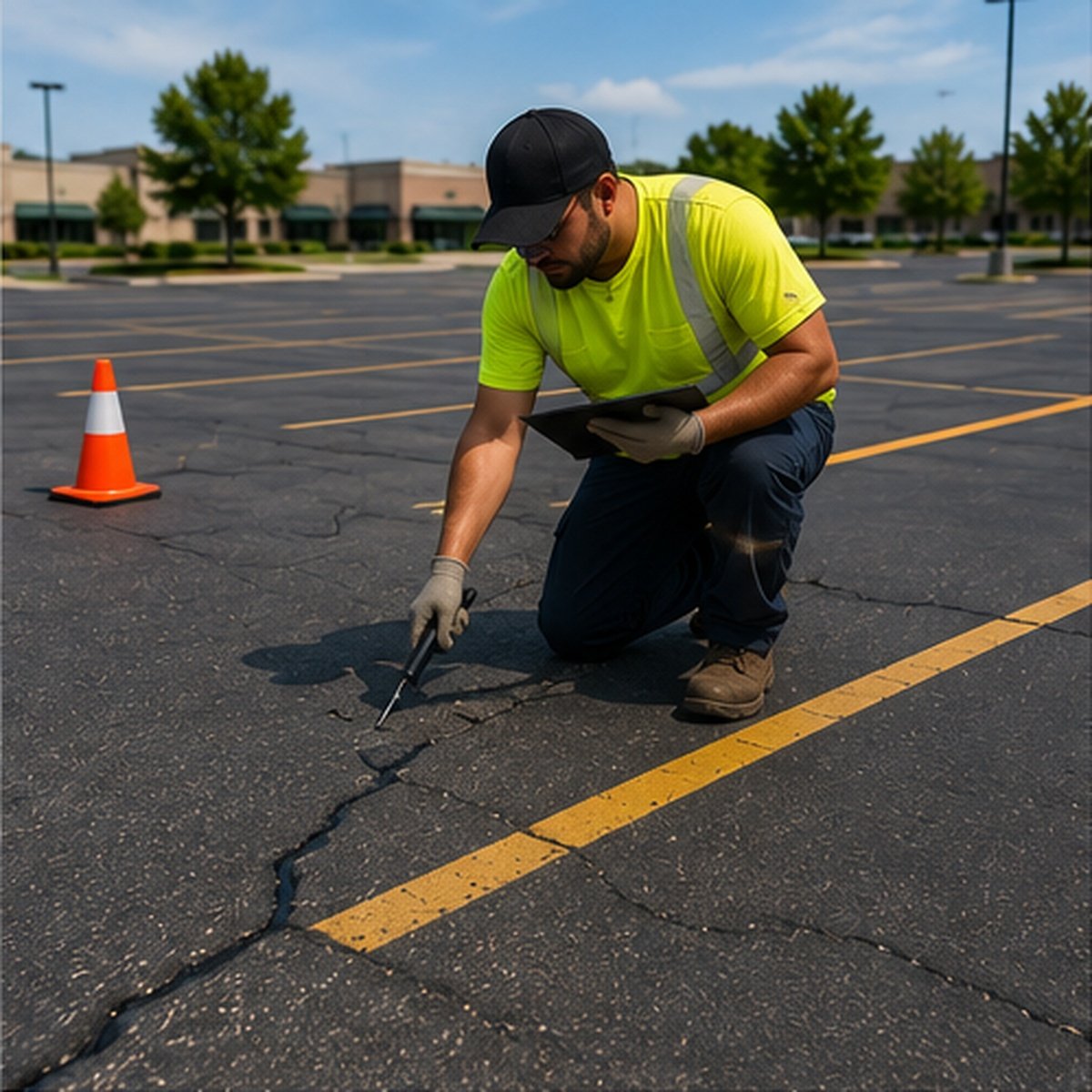
A Hairline Crack Today Is a Pothole by Spring
Sealing cracks early keeps water out of your pavement’s base, the single biggest cause of pothole damage.
Asphalt cracks for a lot of reasons — age, traffic load, tree roots, plain wear — but the real damage happens after the crack is already there. Water gets into it, and in a Kansas winter, that water freezes and expands, widening the crack and undermining the base beneath the surface. By the time you see a pothole, the damage started months earlier as a crack nobody sealed.
We monitor and seal cracks as part of every property visit, not just when you call about a specific spot, and we offer standalone crack sealing visits timed ahead of winter and after major storms. Sealant is applied to clean, dry cracks using hot pour equipment for a durable, flexible seal that moves with the pavement instead of cracking again at the seam.
Sealing a crack costs a fraction of what it costs to patch the pothole that crack would have become. Kansas’s freeze-thaw winters make this math even more lopsided here than in milder climates — water in an unsealed crack expands every time it freezes, and a crack that was a quarter-inch wide in November can be an inch wide, with the edges crumbling, by March. Catching cracks early, and resealing older sealant that’s worn through, is the single highest-value maintenance dollar you can spend on a commercial lot.
We identify and measure cracking across the lot, including cracks that aren’t obvious from a quick drive-through.
Cracks are cleaned of debris and dried before sealing; sealant applied over dirty or wet cracks fails fast and wastes the visit.
Flexible, durable sealant applied with proper equipment, built to move with the pavement through temperature swings instead of cracking again.
Cracks are checked at each subsequent visit, so resealing happens before old sealant fails, not after water’s already gotten back in.
| Pricing factor | How it affects your estimate |
|---|---|
| Lot size & scope | Larger lots and multi-visit contracts change per-unit pricing. |
| Condition at signup | More extensive existing damage means more work on the first visit. |
| Access & scheduling | After-hours or restricted-access work may affect scheduling and cost. |
Crack sealing is typically priced per linear foot, with pricing depending on total crack length, crack width, and site access. Bundling crack sealing with a sweeping visit or preventive maintenance plan usually costs less than scheduling it as a standalone call, since the crew is already on-site.
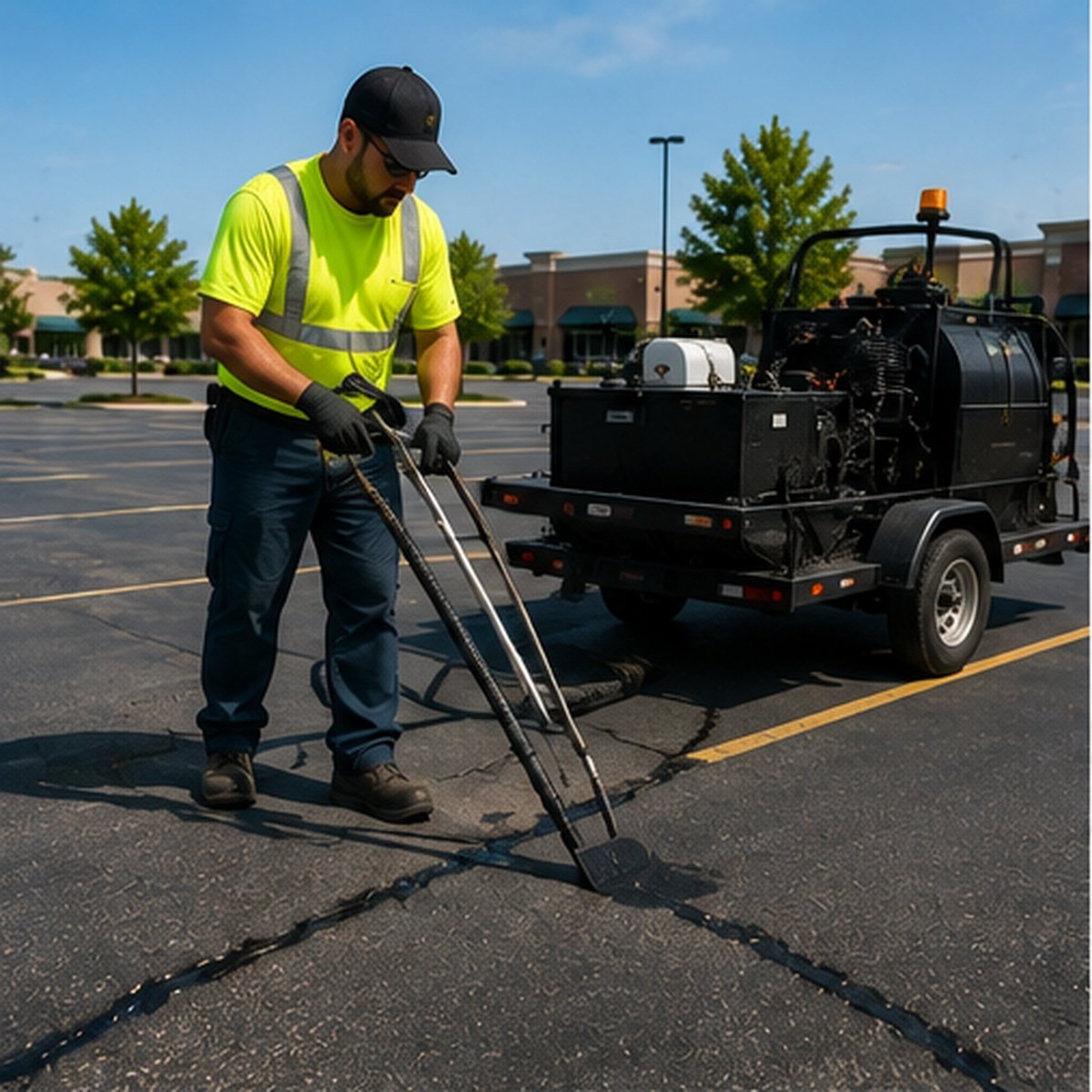
Because our crews are on your property regularly for sweeping, inspections, or pothole calls, we catch new cracks as they form instead of waiting for an annual assessment to find them. That means smaller, cheaper repairs and fewer surprise potholes come spring.
No pressure, no obligation — just a straightforward look at your property.
We inspect the lot and identify cracks worth sealing, including hairline cracks that are easy to miss.
We clean and dry each crack before application.
We hot-pour seal using flexible, weather-resistant material.
We monitor at future visits so resealing happens on schedule, not after failure.
Look for cracks wider than a quarter-inch, cracks with crumbling or ragged edges, and any crack running near a drain, curb line, or high-traffic drive lane where water naturally collects. A crack that’s darkened or looks damp after dry weather is a sign water is already getting underneath the surface. In Wichita, the window that matters most is early fall — sealing cracks before the first hard freeze keeps that winter’s freeze-thaw cycle from turning a manageable crack into next spring’s pothole. If your lot hasn’t had a crack-sealing pass in over a year, it’s worth scheduling an inspection before the weather turns.
Crack sealing works best as part of a regular rhythm, not a one-time fix. A lot sealed once and never checked again will develop new cracks the following season, same as before. That’s why we build crack monitoring into sweeping visits and preventive maintenance plans rather than treating it purely as a standalone call — the more often someone’s looking, the smaller and cheaper each repair stays.
Even hairline cracks are worth sealing before winter — they’re the cheapest ones to fix and the ones that grow fastest once water gets in and freezes.
Properly applied hot-pour sealant typically holds up for several years, though high-traffic areas and severe winters can wear it faster; we check and reseal as needed at each visit.
Yes, within reason — sealant needs a dry, reasonably clean crack, and we time major crack-sealing pushes for fall, ahead of the worst of winter’s freeze-thaw cycle.