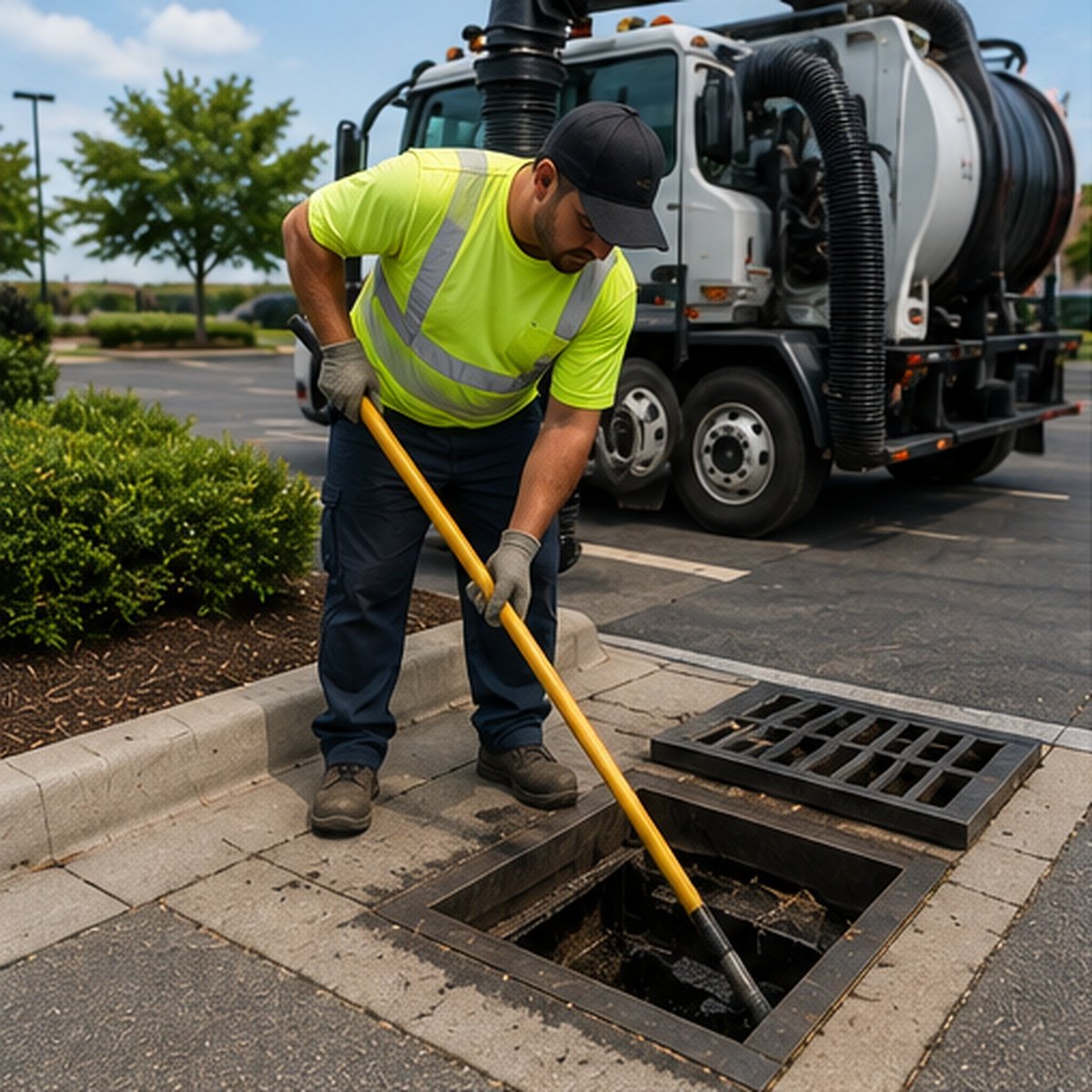
Standing Water on Your Lot?
Clogged catch basins turn a normal storm into a flooded lot — we clear them before that happens.
A parking lot’s drainage system only works if the catch basins and grates are actually clear, and most property managers don’t find out theirs aren’t until water is pooling across a drive lane or backing up toward an entrance during a Kansas thunderstorm. Sediment, leaves, and trash build up in catch basins gradually, and by the time it’s visible, the basin is already restricting flow.
We inspect and clean catch basins, grates, and drainage channels as part of scheduled maintenance visits and ahead of spring and fall storm seasons, when Wichita sees its heaviest rainfall. Where we find a structural issue — a cracked basin, a collapsed pipe, a grade problem pushing water the wrong direction — we’ll document it and give you a clear picture of what it would take to fix, even if that repair is outside our scope.
Catch basins are underground and out of sight, so they’re the easiest part of a parking lot to forget about — until a storm hits and water has nowhere to go. Standing water doesn’t just look bad; it accelerates pavement damage by keeping the surface saturated, creates a slip hazard, and can back up into loading docks, entrances, or lower-level units. Regular catch-basin maintenance is inexpensive compared to the cost of flood damage, a liability claim, or emergency drainage repair during a storm.
We check basin depth, sediment buildup, and grate condition across the property.
Sediment, leaves, and trash are removed from basins and drainage channels to restore proper flow.
We flag cracked, sunken, or missing grates and structural damage that needs repair.
Cleanouts scheduled ahead of spring and fall storm seasons, when Wichita sees its heaviest rainfall and drainage systems are under the most stress.
| Pricing factor | How it affects your estimate |
|---|---|
| Lot size & scope | Larger lots and multi-visit contracts change per-unit pricing. |
| Condition at signup | More extensive existing damage means more work on the first visit. |
| Access & scheduling | After-hours or restricted-access work may affect scheduling and cost. |
Drainage maintenance is typically priced per catch basin serviced, with pricing depending on sediment load and access. Bundling drainage cleanouts with a scheduled sweeping or inspection visit is usually more cost-effective than a standalone emergency call after a flooding incident.
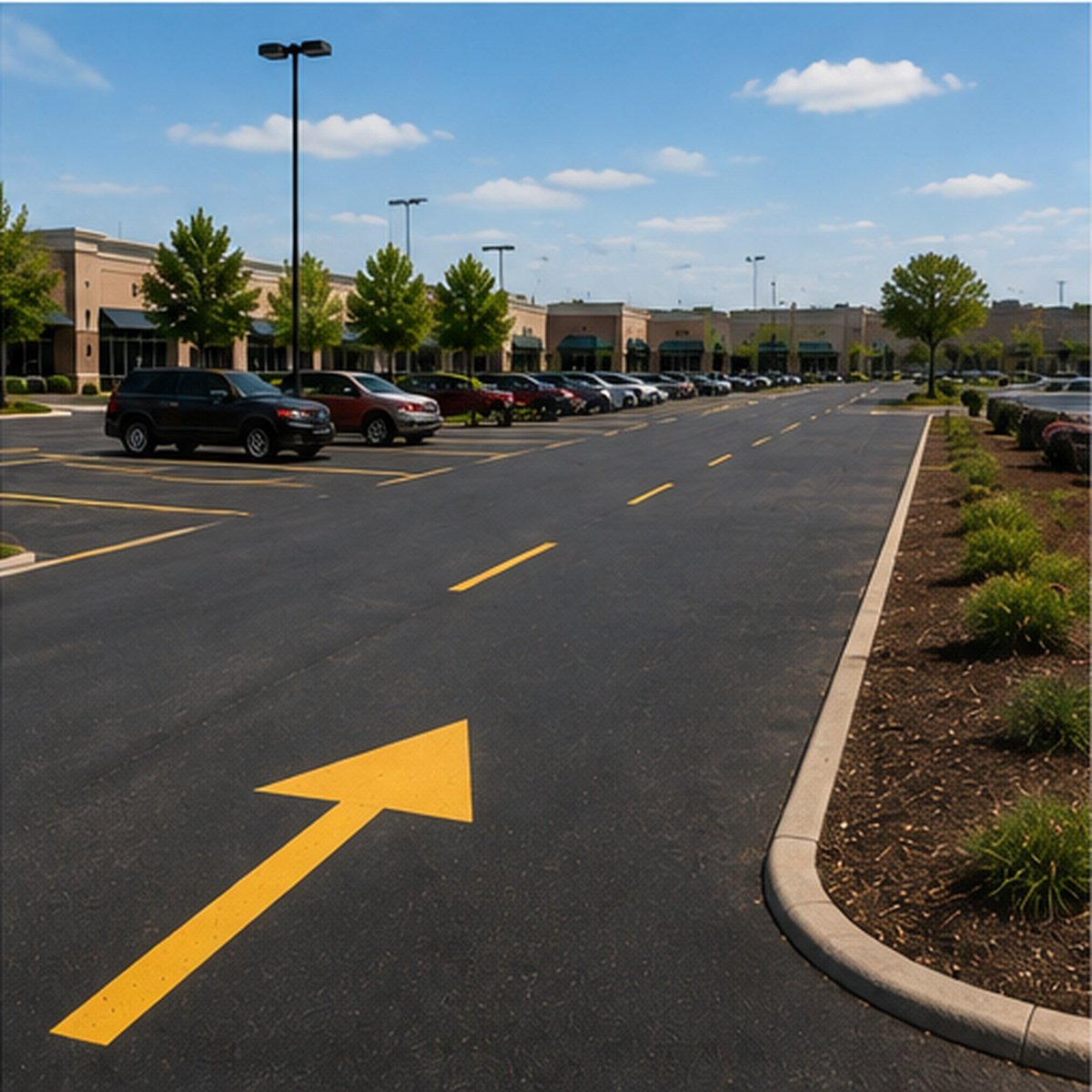
Because we’re already on your property for sweeping and inspections, we catch drainage problems as sediment builds up rather than after a storm floods your lot. And because we handle pavement repair too, if a drainage issue is caused by a grading or crack problem, we can address the root cause instead of just clearing the symptom.
No pressure, no obligation — just a straightforward look at your property.
We inspect every catch basin on the property and check grates and channels for damage.
We remove sediment and debris to restore proper flow.
We flag structural issues — cracked basins, grading problems — with clear documentation.
We schedule seasonal cleanouts ahead of Wichita’s heaviest rainfall periods.
Watch for water pooling in the same spot after every rain rather than draining within an hour or two, a musty smell near a catch basin, visible debris piled against a grate, or water backing up toward a building entrance or loading dock during heavy rain. Wichita’s spring and early-summer storms can drop a lot of rain fast, and a drainage system that’s marginal in a light shower can fail completely in a downpour. If your property has flooded even briefly in the past year, or if a catch basin hasn’t been inspected in longer than you can remember, it’s worth scheduling a cleanout before the next storm season rather than after the next flood.
A parking lot’s pavement lasts longer when water moves off it quickly. Standing water softens the base beneath the asphalt over time, and repeated saturation is one of the quieter causes of the potholes and alligator cracking that show up months later with no obvious trigger. Keeping catch basins clear isn’t just about avoiding a flooded lot during one storm — it’s part of protecting the pavement investment underneath it.
Most commercial properties do well with cleanouts twice a year, ahead of spring and fall storms, though properties near trees or construction may need more frequent service.
We’ll document it with photos and give you a clear explanation of what repair is needed — some structural repairs are outside our scope, and we’ll point you to the right resource if so.
Yes — most of our preventive maintenance plans include scheduled drainage checks as part of the annual inspection cycle.